
Chat background image
Chat banner image

Safaroff Lab

Bear icon

product

SAFAROFF AI

Get the answer in seconds with trained AI bot

Aqrar Innovation Center

The Aqrar Innovation Center is revolutionizing agriculture by integrating modern technology and sustainable practices. Focused on precision agriculture, sustainable farming methods, and collaboration with local institutions, the center enhances productivity while promoting environmental stewardship. Through research, education, and policy advocacy, it empowers farmers to meet the challenges of modern agriculture, contributing to global food security.

  • UI Design
  • UX Design
  • Web development
  • App Development
  • Technical Support
Visit Website
Aqrar innovasiya mərkəzi

Project

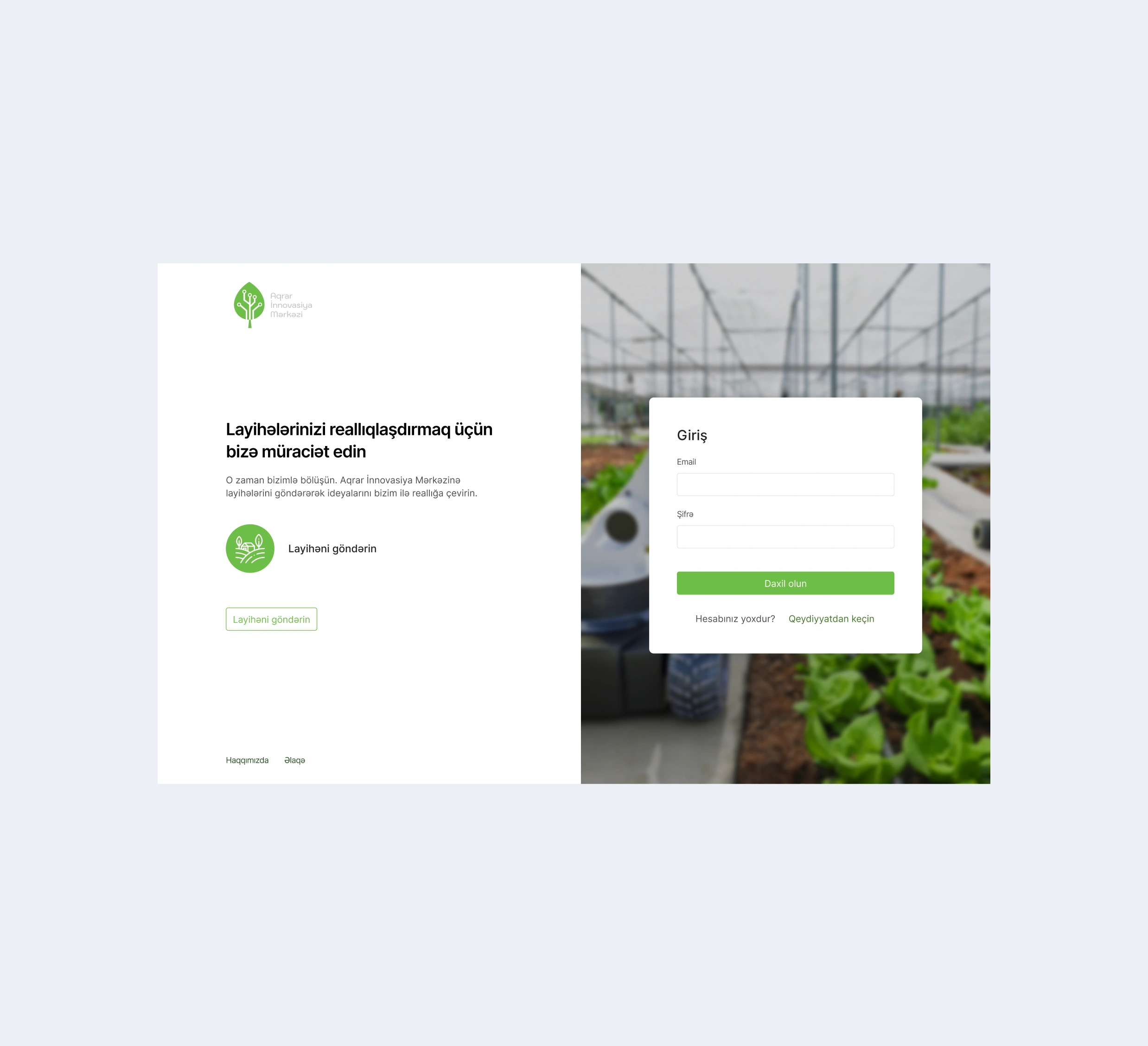
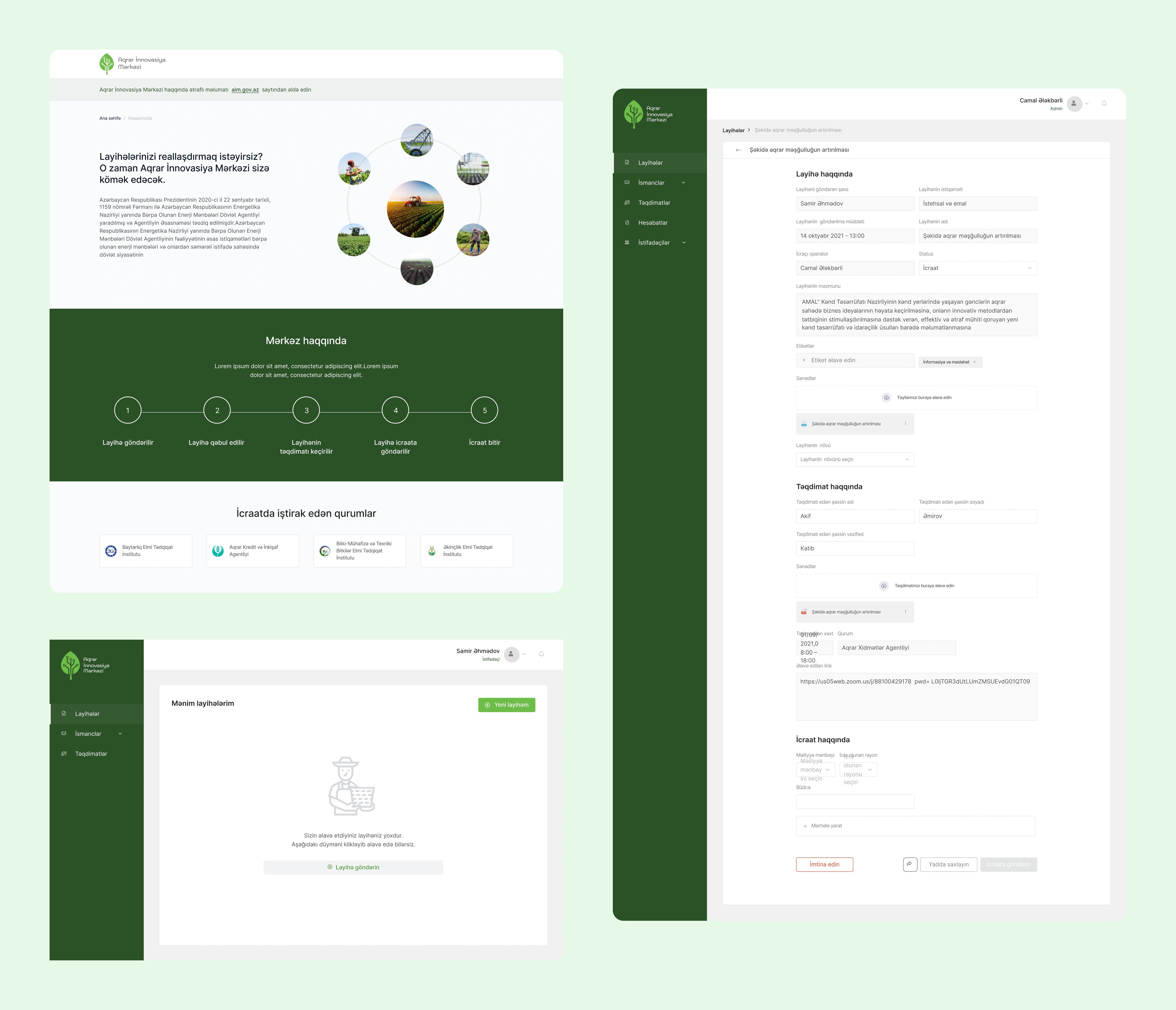
The platform developed for the Agrarian Innovation Center brings together the submission, evaluation, and management of agricultural innovation projects within a single digital system. It creates a transparent and efficient environment for collaboration between farmers, experts, and government institutions.

What did we do?

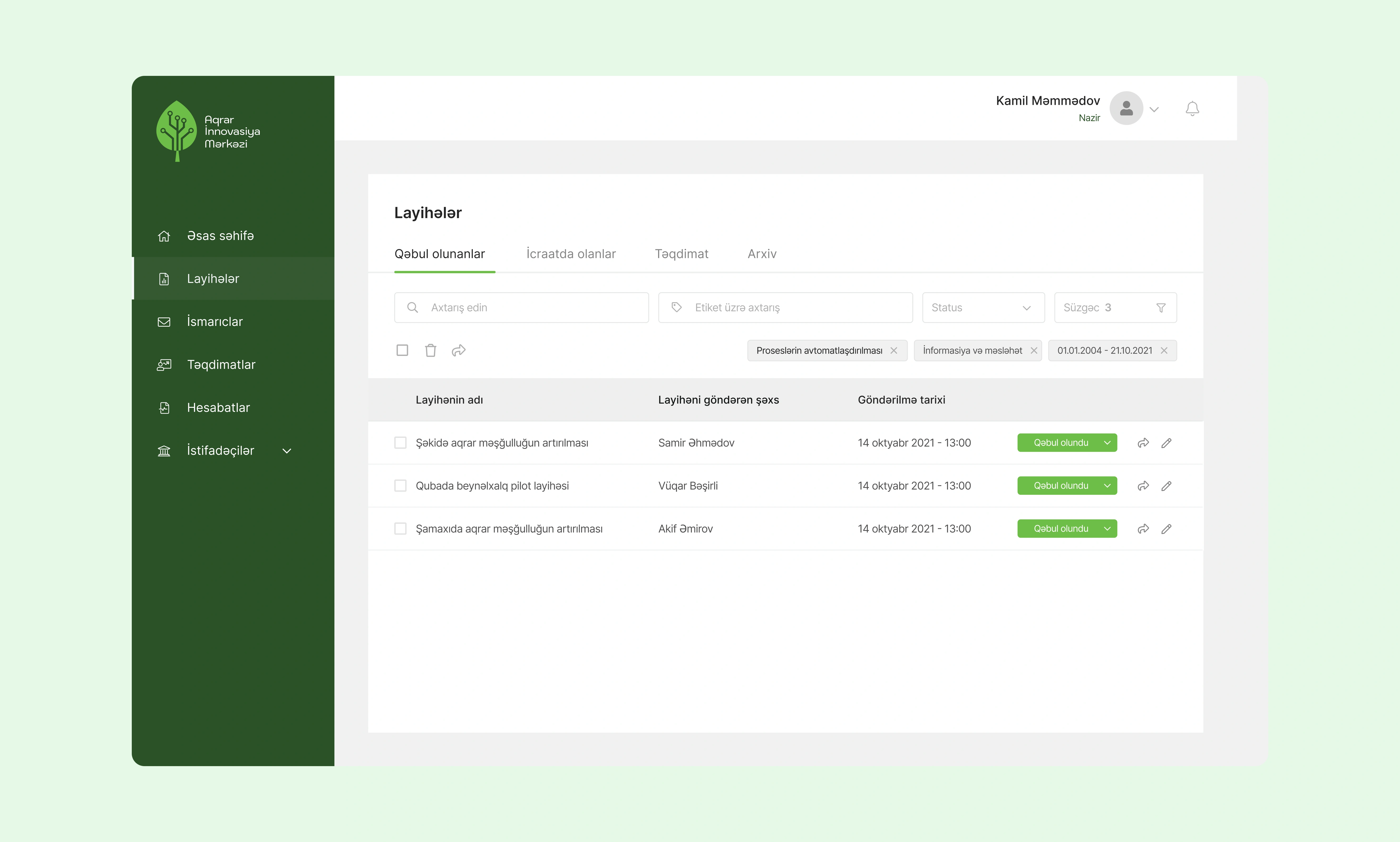
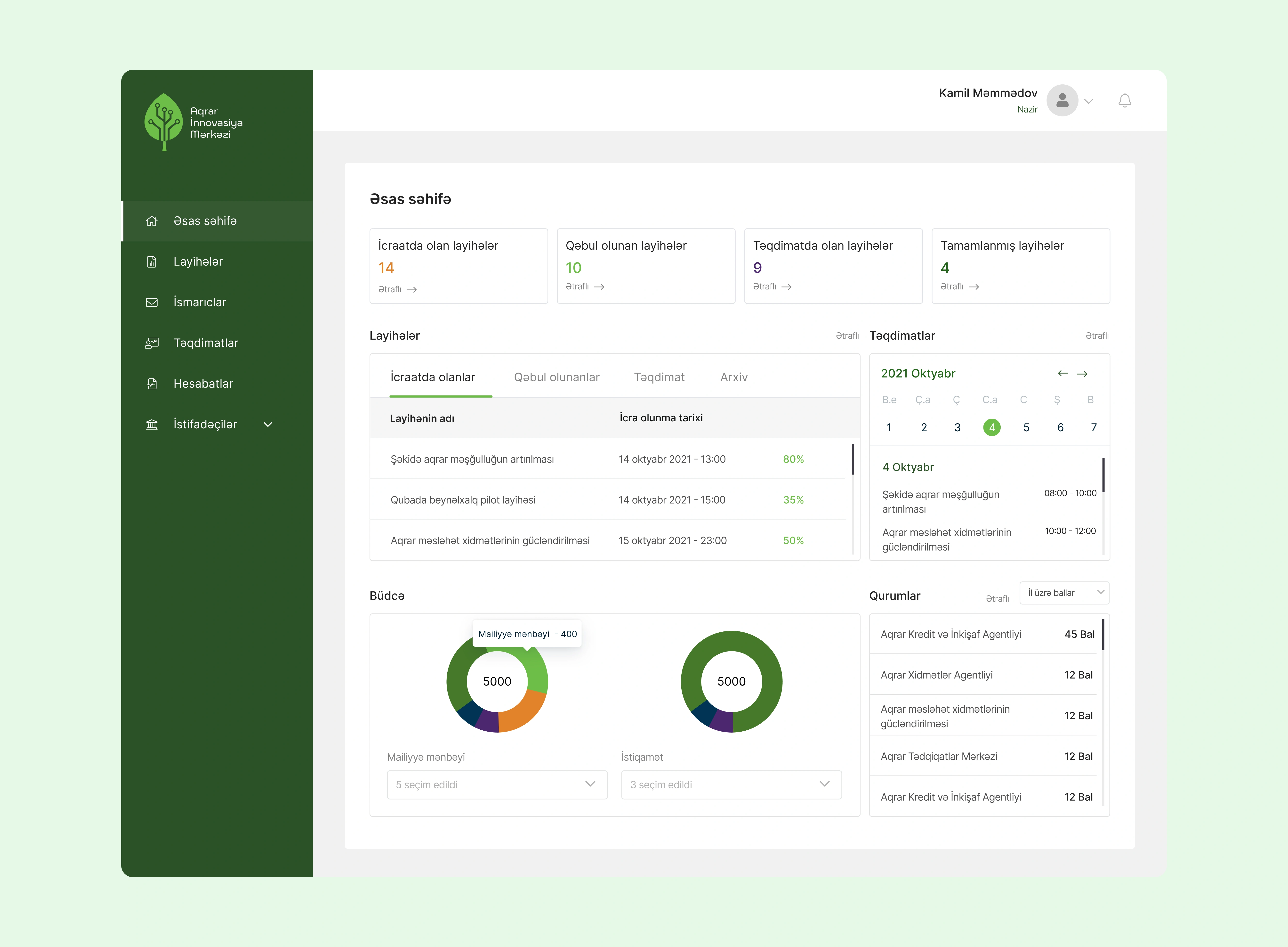
We designed UX/UI for project submission, status tracking, presentation scheduling, and reporting modules. We also created analytical dashboards for different user roles, developed the responsive front-end, and integrated CMS tools for easy content and process management. 

Result

As a result, we delivered a scalable and production-ready platform tailored to institutional use. The solution streamlined project management, accelerated decision-making, and significantly improved communication between users and the organization. 

Result

As a result, we delivered a scalable and production-ready platform tailored to institutional use. The solution streamlined project management, accelerated decision-making, and significantly improved communication between users and the organization. 

Special consideration was given to ensuring that different user roles could operate within the same system while having distinct views and permissions. For management, particular emphasis was placed on the importance of visual indicators that support fast and well-informed decision-making. As a result of this research, the design concept was shaped to be simple, clear, and suitable for long-term use.

Color-coded statuses and visual hierarchy enabled faster understanding of the current state of projects. This approach minimized the risk of misinterpretation by users. Showing only contextually necessary fields in project forms helped reduce data entry errors. Calendar-based presentation planning made users’ time management more effective. The visual analytics applied in the dashboards accelerated the decision-making process.

The indicators prepared for management made it possible to analyze the overall status of projects in a shorter time. Applying different views for different user roles reduced information overload. This helped users focus their attention on the main operations.

As a result of the UX design, fewer backward steps were observed in user flows. The sequence of completing operations within the platform became more stable. The indicators of speed and clarity that affect user satisfaction were improved. As a result, the design decisions created a sustainable and measurable user experience aligned with business goals.